
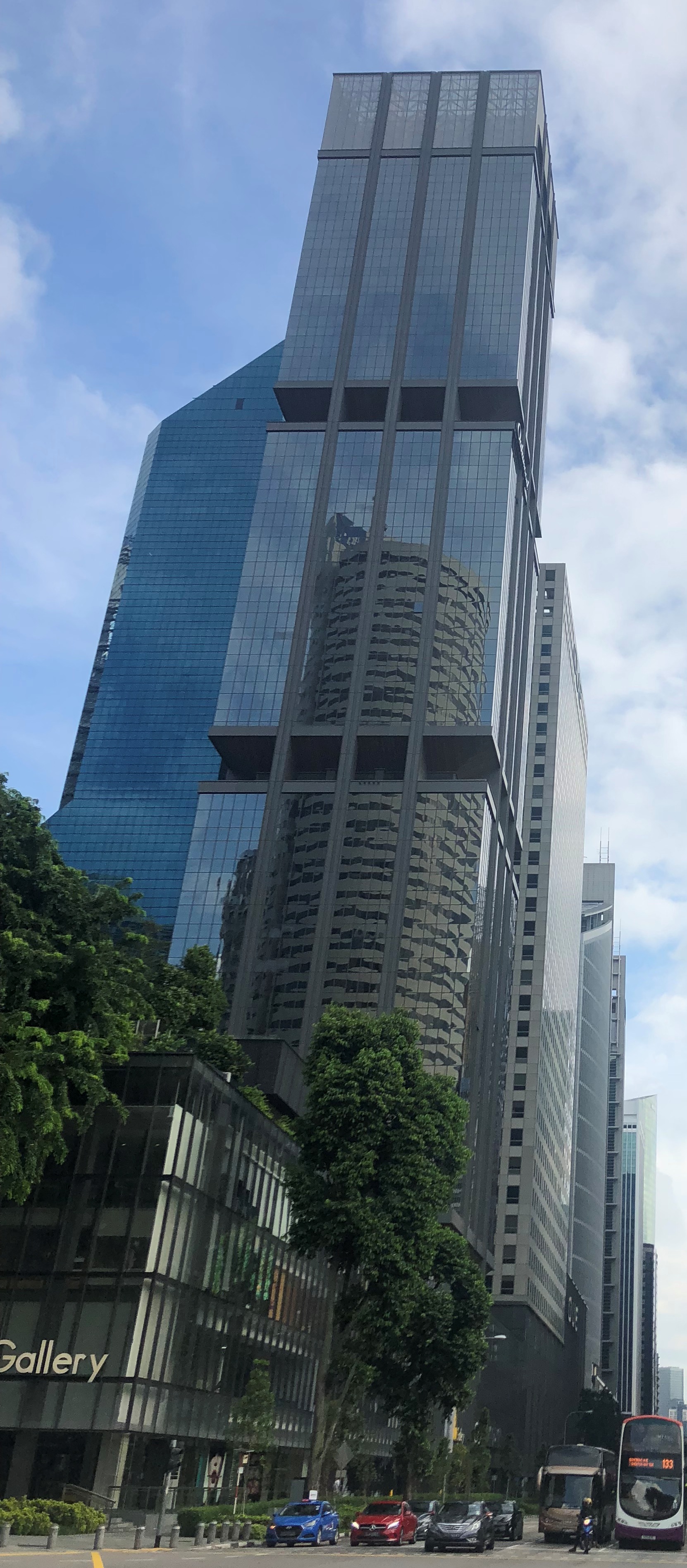
A residence with a hotel's expectations.
OUE Oakwood Residence is a serviced-apartment property at the upper end of Singapore's long-stay market. Residents — corporate relocations, family offices, executives on multi-month assignments — pay for the privacy of an apartment with the service standard of a five-star hotel. They check in, they live there, they leave. While they live there, they expect the front desk to know their name, the lift to be where they left it, and the lobby to feel like the lobby of a place they would choose to live in.
Security at a property like this is part of that experience. Officers are not there to be visible to residents in the way that a stadium officer is visible to a crowd. They are there to be present in the way a building's senior staff are present — known, professional, available, and unobtrusive when not needed. The lobby is the lounge. The standard is hospitality-grade.
The watch never ends.
Hawkeye holds a long-term standing watch at OUE Oakwood. The deployment is structured as a continuous officer presence — covering the lobby and entrance, the lift core, the back-of-house ingress points, and the package-handling area where deliveries arrive on behalf of residents.
Officers are rostered to provide consistency across days and weeks. Residents see the same faces, which matters more in a residence than it does in a venue: a returning resident expects the officer at the desk to recognise them after a two-week trip, and the officer in question will. The hand-off between shifts is a structured briefing — incidents, packages, expected guests, anything operationally noted from the previous shift. None of it is dramatic. All of it is essential to the standard of the building.
- Lobby presence. Officer at the front, working alongside the building's concierge and front-desk team.
- Lift core access. Resident-card and visitor verification at the controlled-access points.
- Visitor management. Greet, verify, escort to the right floor, log on departure.
- Back-of-house. Service-lift cover, contractor sign-in, package and delivery handling.
- Incident response. Medical, lock-out, lost-card, noise, and the rest of the catalogue of small daily things that happen in residences.
The lobby on a good day.
From a resident's perspective, the standing watch should be invisible most of the time and instantly available when needed. A resident walking into the building from a long flight should be greeted, their luggage handled if they want it handled, and their lift summoned if they prefer to go straight up. A resident expecting a delivery should find that the package is logged and waiting at the desk. A resident bringing a guest in should find that the visitor protocol is courteous and quick.
The Hawkeye standard is that none of this is operationally remarkable to the resident. It is also, behind the scenes, the result of consistent practice. The officer at the desk has been on the desk before. The officer behind the lift core has been there before. The resident who has been at the property for six months knows the watch by face; the resident who arrived yesterday will know it by face by the end of the week.
The work nobody notices.
Most of the work in a residential standing watch is the work that nobody notices, including the residents we do it for. The contractor who arrives at the wrong service-lift door and is gently redirected. The delivery driver who needs to be checked against the day's expected manifest. The unscheduled guest who is asked to wait while the resident is called. The medical incident at 03:14 that was handled, logged, escalated to the building's duty manager, and resolved before the morning shift arrived. The misdirected package that was traced and returned.
This is the volume work that defines the standard. The dramatic events are rare. The non-dramatic events are constant. The firm is paid for both.
Named, on the record, on the floor.
The Director of Security at OUE Oakwood Residence, Prakash Singh, has provided a written testimonial about a specific Hawkeye officer — Officer Tamilselvam — and has authorised that testimonial for use in the firm's records.
It is an unusual proof point. Most testimonials in the security industry are for the company; this one is for the person. The fact that a director-level client knows our officer by name, and has put on the record that the officer represents the standard of the property, is the strongest signal of how a long-term residential partnership is supposed to feel. The relationship is at officer level, not at contract level.
Quoted with permission. Full reference letter available on request.
The verifiable facts of this engagement are: that Hawkeye runs a long-term standing watch at OUE Oakwood Residence, that the Director of Security Prakash Singh provides the firm's reference, and that he has named Officer Tamilselvam in his testimonial. The descriptions of the daily watch above are illustrative of how a five-star residential standing partner runs; specific officer rosters, building-internal protocols, and resident-related details are not described publicly.
Standing partner, residential edition.
A serviced residence is the closest test the firm faces of its single operations standard. The partner has to perform the standard every shift, for years, with the same officers, in front of the same residents — not just when a director is visiting. The reward is a relationship at officer level: the building's residents and staff know our team by face, and our reference points are people who have worked alongside our officers long enough to be specific about them.
If your engagement is a residence, a serviced apartment, a private estate, or a similarly long-running standing brief — we should talk.