
The course is built in the dark.
A marathon is unusual among major events in that the venue is the city. There is no perimeter to fence; the start and finish are constructed; water stations are built where streets normally carry traffic; and the entire operation has to come down again before the morning commute resumes. The build for race day starts on the evening before, in the dark, with road-closure barriers being trucked in by the LTA and the marathon's contracted logistics teams.
Hawkeye's pre-dawn cover begins with the build. Officers are positioned at the construction sites of the start and finish, at the inbound vehicle gates that bring water, medical, and timing infrastructure onto the course, and at the elite-runner pen as it is staged. The brief on the night before is two-fold: protect the build, which is a multi-million-dollar logistics operation that has to be assembled correctly, and protect the access, which is the chain of credentials that says which vehicles and which people are allowed onto a course that will not be operational for another four hours.
The start line at four in the morning.
By 04:00, the start line is up. The corral is fenced; the timing mats are calibrated; the stage and PA are tested; the elite-runner pen is open; and the first wave of participants is arriving from the city's hotels and HDB estates by taxi, train, and shuttle. Hawkeye officers cover the corral entry, the elite pen access, and the inbound participant flow at every entry point.
The corral entry is the part of the operation that determines whether the start goes off cleanly. Participants arrive over a 90-minute window before the gun, in waves, with bib-and-chip identifiers that have to be visible at entry. Officers screen, hold the line, and route. Volunteers handle the runner-side experience; officers handle the perimeter. The two roles do not cross, and the two teams brief together at 03:30 before either takes its position.
The course goes live.
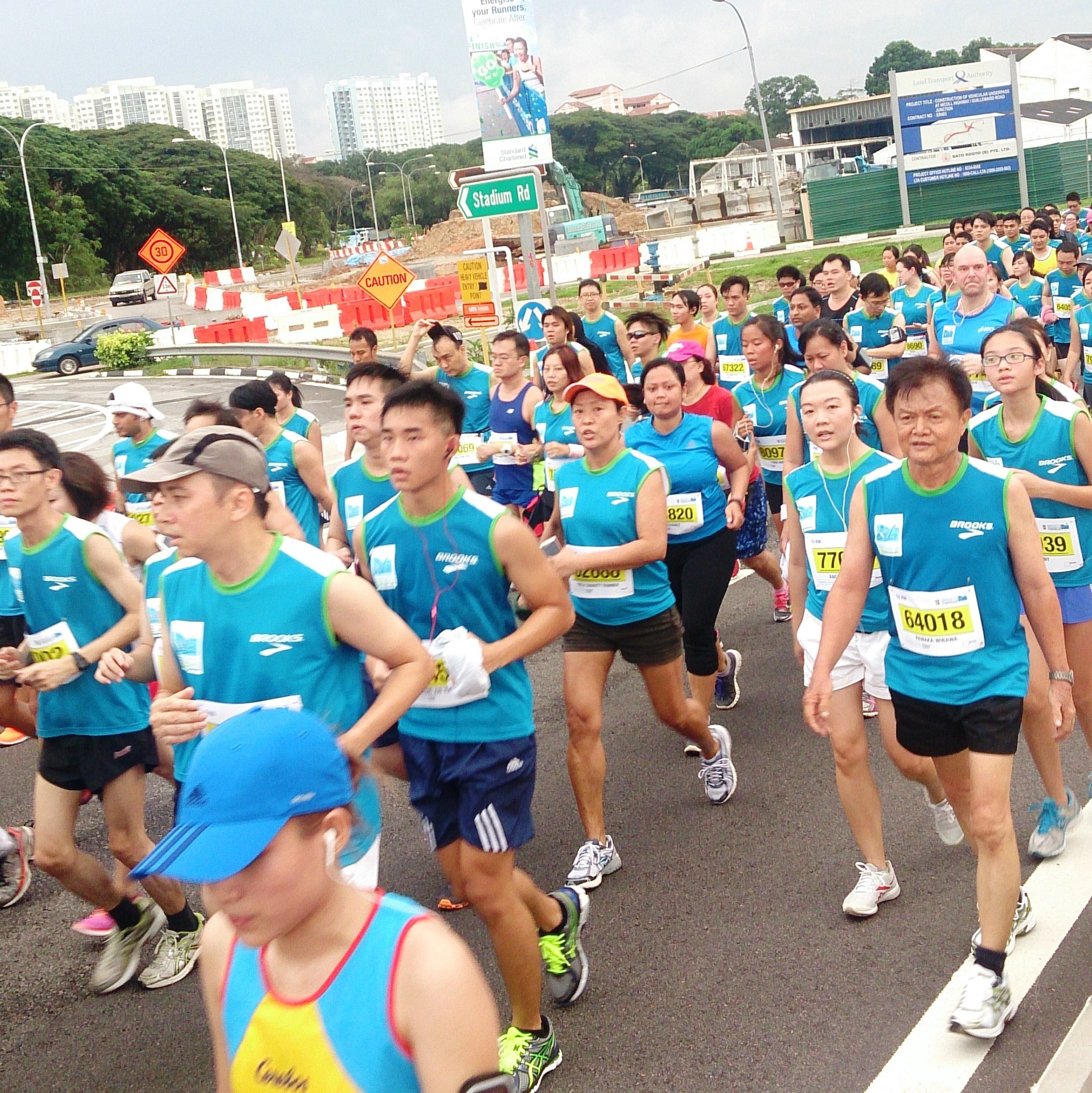
The race starts. The participants leave the corral and the course goes live. From this point, every road that the route uses is a closed road, every junction is a managed junction, and every water station is a working station. The course covers approximately twenty-eight kilometres of road closures across the marathon, half marathon, and shorter-distance courses combined. The operation does not pause until the last participant is past the finish.
Hawkeye's mid-race cover sits at three layers. Course-side officers at junction-control points and at gallery clusters where spectators gather. Water-station officers at every aid station along the route, working alongside the marathon's volunteer water teams. Pen-side officers at the elite-runner pen for the duration that elite competitors are in the venue. Each layer has its own command and its own escalation. All three feed into a single Hawkeye position inside the marathon's combined ops centre.
- Junction control. Officer presence at every controlled junction along the route, in support of LTA traffic control and SPF officers.
- Water stations. Perimeter cover at each aid station; officer support for medical and volunteer teams.
- Elite pen. Dedicated officer cohort for the elite-runner area before, during, and after their race window.
- Mobile cover. A small mobile team that responds to course incidents, escorts replacement supplies, and supports the lead vehicle.
The hours when most things happen.
The middle of the race — between the gun and the leading finishers — is the longest operational window. Most participants are on the course; the heat is rising; the medical teams are working; the volunteer marshals are tiring; and the spectator clusters are becoming denser at the finish-line approach.
Most incidents on a marathon are medical. Heat collapse, dehydration, occasional trip-and-fall — all handled by the marathon's medical teams, with Hawkeye officers supporting the route to the medical tent, holding the course clear for the medical vehicle, and keeping the rest of the field moving past without disruption. The standard is that the runner who collapsed is treated, the runner three paces behind keeps running, and the spectator on the kerb sees neither.
The last hundred metres.
The finish is the part of the route that is closest to a stadium operation. A finishing chute leads through a recovery zone where medals are placed, water and recovery food are handed out, and finishers' bag drops are reunited with their participants. The chute is fenced on both sides, the recovery zone is fenced from the spectator gallery, and the post-race exit is routed to the public-transport feed.
Hawkeye's finish-area cover handles chute perimeter, recovery-zone access (finishers only), bag-drop reunion (chip-validated), and the spectator-side cordon where families wait for their runners. The post-race exit cordon stays in place until the last participant has finished — which, in a marathon, can be three to five hours after the elite winners have crossed.
The course goes back to being a city.
By mid-morning the leading finishers have crossed, the bulk of the field has crossed, and the operational temperature has dropped to a long-tail demobilisation. Water stations come down; barriers are recovered; junctions are returned to normal traffic; and the start and finish structures are dismantled. Hawkeye cover continues through the demobilisation: the same standard, fewer officers, longer hours.
The post-event report is filed within seventy-two hours and signed by the senior officer on the day. The course was clear, the participants were safe, the medical incidents were handled, and the operation was demobilised on time. That, on a marathon, is the entire deliverable.
The Standard Chartered Singapore Marathon operates under organising-committee confidentiality terms. Officer counts, route plans, command structures, and any post-incident operational changes are not described publicly. The descriptions above are at the right altitude for a public account; the specifics are available under non-disclosure on request.